Canine Health • Prevention • Nutrition
Forbidden and Toxic Foods for Dogs: What You Absolutely Need to Know
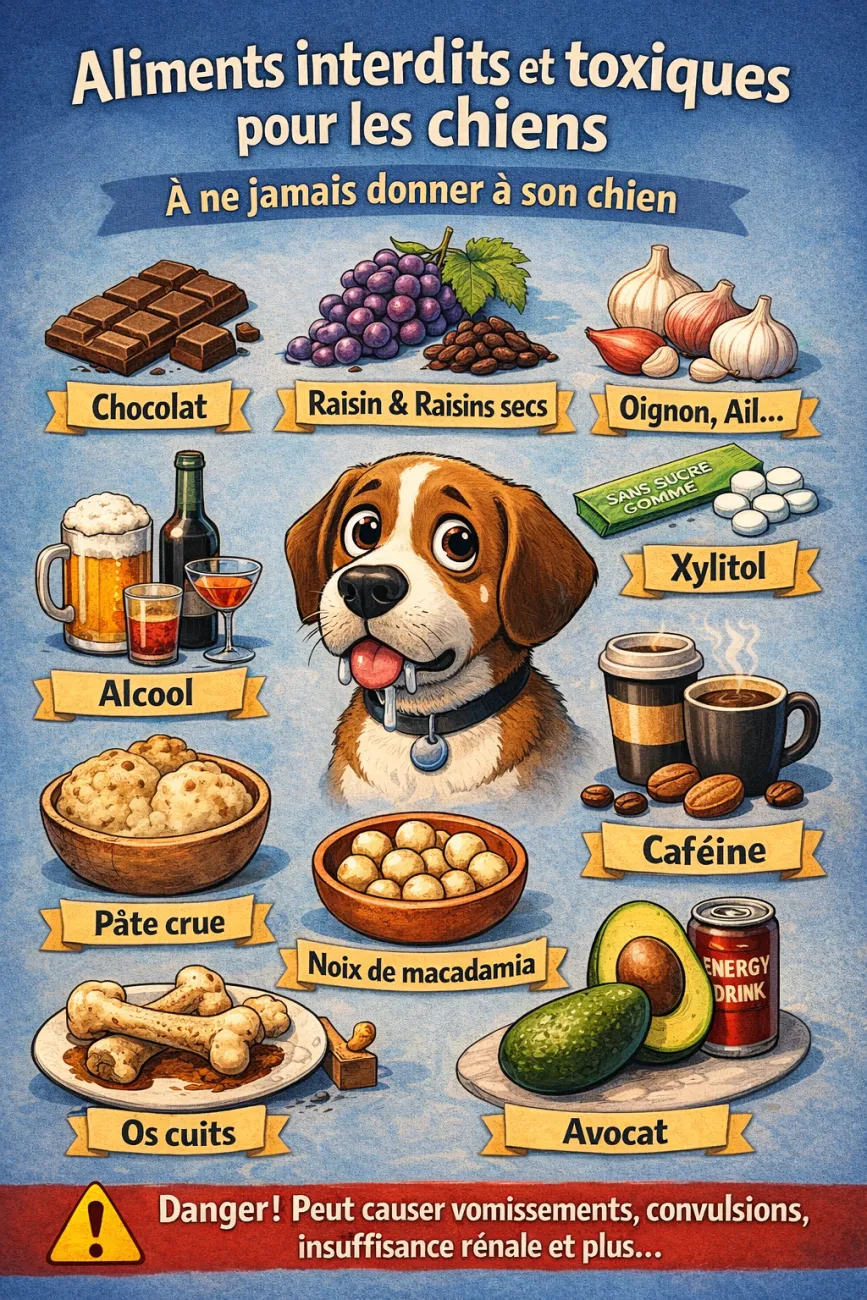
Chocolate, grapes, onion, xylitol, alcohol, caffeine… Some everyday foods can be dangerous, even fatal, for dogs. Here are the main toxic foods, the symptoms to watch for, and the right steps to take if your dog eats something harmful.
Why are some foods toxic to dogs?
A dog’s metabolism is very different from that of a human. Some substances that we tolerate well can be poorly processed, irritating, or frankly toxic for dogs. Depending on the food eaten, the consequences can range from mild digestive upset to neurological, cardiac, liver, or kidney damage.
The severity depends on the amount ingested, the dog’s weight, age, general health, and the exact product consumed.
Main forbidden and toxic foods
Chocolate
Chocolate contains theobromine, which dogs eliminate very poorly. The darker and richer in cocoa the chocolate is, the more dangerous it becomes.
Possible symptoms: agitation, vomiting, diarrhoea, rapid heart rate, tremors, seizures.
Grapes and raisins
Fresh grapes and raisins can cause acute kidney failure. Toxicity is unpredictable: some dogs react to very small amounts.
Possible symptoms: vomiting, lethargy, abdominal pain, reduced urination or no urination at all.
Onion, garlic, shallots, and leeks
These allium vegetables can damage red blood cells and cause haemolytic anaemia. They can be harmful raw, cooked, dried, or powdered.
Possible symptoms: tiredness, weakness, shortness of breath, pale gums, digestive upset.
Xylitol
Found in some chewing gums, sweets, toothpaste, baked goods, and “sugar-free” products, xylitol can cause a sudden drop in blood sugar and sometimes severe liver damage.
Possible symptoms: sudden weakness, vomiting, loss of balance, seizures, coma.
Alcohol
Even in small amounts, alcohol can seriously affect a dog’s nervous system and metabolic balance.
Possible symptoms: disorientation, drowsiness, vomiting, tremors, breathing difficulties.
Caffeine
Coffee, tea, energy drinks, certain soft drinks, and some supplements containing caffeine can be very dangerous for dogs.
Possible symptoms: agitation, rapid heart rate, hyperactivity, tremors, seizures.
Cooked bones
Cooked bones are not chemically toxic, but they are mechanically dangerous: they can splinter and cause internal injuries.
Possible risks: pain, constipation, digestive perforation, intestinal obstruction.
Macadamia nuts
Macadamia nuts are known to be toxic to dogs, even though the precise mechanism is still not fully understood.
Possible symptoms: weakness, tremors, vomiting, hyperthermia, pain.
Avocado
Avocado may cause problems because of persin, and the pit also presents a choking or intestinal blockage risk.
Possible symptoms: vomiting, diarrhoea, digestive discomfort.
Raw yeast dough
Raw dough containing yeast can expand in the stomach and produce alcohol through fermentation.
Possible risks: stomach distension, abdominal pain, secondary alcohol intoxication.
Foods that are not recommended, even if not strictly toxic
Some foods are not always toxic in the strict sense, but they are still unsuitable for a dog’s system: very fatty foods, spicy dishes, table scraps, processed meats, sauces, fried foods, and products that are very salty or very sweet.
They may contribute to vomiting, diarrhoea, digestive discomfort, weight gain, or even pancreatitis.
What should you do if your dog has eaten a toxic food?
- Stay calm and remove any remaining product immediately.
- Note down the food involved, the approximate amount, the time of ingestion, and your dog’s weight.
- Contact your veterinarian quickly or a veterinary poison control centre.
- Do not induce vomiting without veterinary advice.
- Keep the packaging if possible, especially for chocolate, sweeteners, baked goods, or medication.
Some intoxications progress very quickly. Even if symptoms seem mild or absent at first, early treatment can make a major difference.
How can you prevent accidents?
- Do not leave food within reach on a low table, in a bag, or on a kitchen worktop.
- Explain to children and visitors that they should not feed the dog without your permission.
- Store sweets, chewing gums, and baked goods out of reach.
- Avoid routinely sharing your meals with your dog.
- Choose a diet that is appropriate for your dog’s needs and health condition.
FAQ – Toxic foods for dogs
My dog ate a small piece of chocolate. Is it serious?
It depends on the type of chocolate, the amount eaten, and the dog’s weight. Dark chocolate is much more dangerous than milk chocolate. When in doubt, contact a veterinarian quickly.
Are grapes really dangerous even in small amounts?
Yes. In some dogs, even a small amount can be enough to cause severe kidney damage. Any ingestion of grapes or raisins should be treated seriously.
Can I make my dog vomit at home?
No, not without veterinary advice. In some situations, inducing vomiting can make things worse or may be contraindicated.
Are all bones dangerous for dogs?
Cooked bones are particularly risky because they can splinter. Even with other kinds of bones, caution is still needed depending on the dog and the situation.
What should I do if my dog constantly begs at the table?
It is important not to reinforce begging, to set consistent rules, and, if needed, to get support in managing the behaviour at home.
Need support for your dog?
Issues linked to food, management at home, resource guarding, restlessness, or difficulty setting clear and consistent boundaries can all be part of a broader behavioural picture.
A behavioural assessment helps analyse the situation, understand the underlying causes, and put in place support tailored to your dog, your lifestyle, and your goals.