Home
education-canine-en-margeride.fr

Navigation principale

  • Home
  • Comportementalisme & Education
    • What behavioral problems can occur?
    • Les activitĂ©s ludiques & sportives : excellentes continuitĂ©s de l'Ă©ducation
    • Qu'est-ce que l'Ă©ducation naturelle ?
    • Qu'est-ce que l'Ă©ducation positive ?
    • Le langage canin : clef de la comprĂ©hension du chien
    • Massages canin
  • Services
    • Bilan comportemental
    • Cours d'Ă©ducation canine
    • Fun and sports dog activities
    • Chien de travail
    • Interventions “ PrĂ©vention Morsure “
    • ActivitĂ©s ludiques & sportives
    • Consultation canine en visio
  • Les Chiens de Ma vie
    • Bahia : Terre-Neuve ange de nos enfants !
    • Filou, bichon X - un rescapĂ© remplit d'amour
    • Odin, Bullmastiff : un contemplatif qui a choisit notre maison !
    • Ollie, Berger Australien, une source d'Ă©nergie pour tous les projets
    • Uno : X Malinois survitaminĂ© aussi attachant qu'attachĂ©
    • Uzi : Golden Retriever complice des enfants !
  • DiplĂŽmes
  • Tarifs 2025
  • Conseils Pratiques
    • Adapter les activitĂ©s Ă  la condition physique
    • Apprendre Ă  marcher en laisse sans tirer
    • Bien ajuster et habituer son chien au harnais
    • Bien choisir le collier ou le harnais selon la morphologie de son chien
    • Chien en dĂ©pression que faire ?
    • Collier plat ou harnais ?
    • GĂ©rer l'arthrose chez son chien
    • Habituer son chien Ă  porter un collier ou un harnais
    • Jeux de rĂ©flĂ©xions pour chiens
    • La dysplasie : pathologie courante, pas une fatalitĂ© !
    • La surveillance du poids de son chien : un rĂ©flexe indispensable pour sa santĂ© !
    • Le collier Ă©lectrique... est-ce une bonne idĂ©e ou un leurre d'Ă©ducation ?
    • Le pelage du chien : indicateur de son Ă©tat de santĂ© & entretien rĂ©gulier
    • Les diffĂ©rents harnais : comparaisons & contextes
    • Les diffĂ©rents types de laisses et leurs usages
    • NĂ©cessitĂ© et biens faits de la balade rĂ©guliĂšre du chien
    • Pratiquer un sport avec mon chien : est-ce une bonne idĂ©e ?
    • PrĂ©cautions PĂ©riode de chasse
    • Qu'est-ce qu'un Hot Spot et comment le traiter ?
    • Quelle alimentation pour son chien ?
    • Transport en voiture : que dit la loi ? (et le bon sens)...
  • Adresses Utiles & recommandĂ©es
    • Cabinet VĂ©tĂ©rinaires Gatavet
    • Cabinet VĂ©tĂ©rinaire de la Montagnette
    • Educ M'ouaf
    • Symdog
    • Formateur Chiens au Troupeau - Etienne SerclĂ©rat
    • Temps des Paluns
  • Recommandations LittĂ©rature canine
    • Comprendre Les Chiens
    • Guide pratique du comportement du chien
    • Le monde secret du chien
    • Tout ce que mon chien veut me dire
Menu du compte de l'utilisateur
  • Log in

Breadcrumb

  1. Home
  2. Canine Massage: a Tool For Behavioral Balance
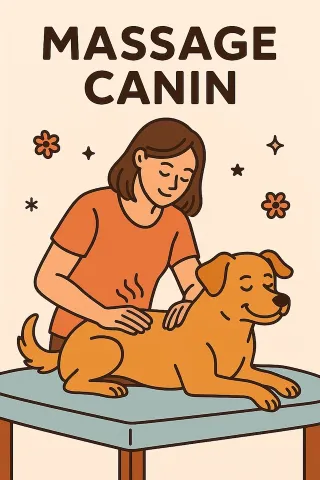
Canine massage: a wonderful tool for behavioral balance

đŸ’†â€â™‚ïž Canine massage: a tool for well-being and behavioral balance

Introduction: when touch becomes a language

Canine massage is far more than a moment of relaxation. It is a communication and calming tool that helps dogs regain physical and emotional balance. Within a behavioral approach, it becomes a supportive educational complement: it promotes relaxation, trust, body awareness, and helps release tensions that are often invisible.

🐕‍đŸŠș A relaxed dog learns, understands, and expresses itself better.

1) Body and mind: an inseparable link

As with humans, a dog’s emotional well-being depends on their physical state. Pain, tension, stiffness, or postural imbalances may result in irritability, avoidance of contact, growling, excessive barking, difficulty concentrating, or fear of grooming. Dogs do not verbalize; they express through behavior. By acting on the body, massage helps to release tension and restore emotional balance.

2) Massage as a behavioral tool

  • Soothing emotions: release of endorphins and oxytocin → reduced stress and anxiety.
  • Strengthening communication: acceptance of touch and increased trust in human contact.
  • Repairing the relationship: useful after negative experiences to rebuild the bond.
  • Encouraging self-control: a relaxed body makes the dog more receptive to learning.

Massage does not replace education or behavioral therapy; it enhances their effects by preparing the dog to be calm, receptive, and focused.

✋ Massage is a bridge between body and mind.

3) For which dogs?

  • Anxious, hypervigilant, or hyperactive dogs.
  • Dogs with a history of trauma (abandonment, mistreatment, fear of humans).
  • Senior dogs (stiffness, osteoarthritis) to improve comfort and mobility.
  • Working or sporting dogs (preparation and recovery).
  • Dogs in behavioral rehabilitation to lower overall tension.

Each session adapts to the dog’s tolerance and pace: you don’t “do” a massage—you share it.

4) Observed effects

  • Calmer breathing, relaxed muscles, softer gaze.
  • Deeper sleep and better recovery.
  • Improved focus during training sessions.
  • Reduced reactivity (hypervigilance, defensive aggression).
  • A more serene relationship with the handler and household.

5) A natural complement to positive education

Positive education and massage share the same goal: a calm dog learns better. By lowering stress levels, massage helps manage frustration, improve listening skills, encourage refocusing, and approach new situations more calmly. More and more educators use it as a support tool alongside relaxation, controlled walks, and mental stimulation.

6) A ritual of connection

Beyond technique, massage is a ritual of trust: a moment without commands or constraints, based on attentive listening. It strengthens attachment, reduces stress for both dog and human, and helps restore serenity within the household.

💞 Learning to touch with respect is learning to listen differently.

Conclusion: a gentle tool for lasting balance

Canine massage is a valuable complement to any behavioral work. By acting on both the physical and emotional, it restores confidence in the dog’s body, facilitates learning, and strengthens the bond with their human.

đŸŸ Calm the body, and you open the door to the mind.

Important: in cases of acute pain, limping, fever, skin lesions, or sudden behavioral changes, consult your veterinarian first. Massage is a well-being complement and does not replace medical advice.

📍 Contact details

Pascal Flork
Éducation Canine en Margeride
678, route du Lioubeau
48600 Auroux, France

📧 pascal@education-canine-en-margeride.fr
📞 +33 6 19 36 03 64
🌐 education-canine-en-margeride.fr

English spoken


🚗 Service area

Margeride, LozĂšre (48) and neighboring departments:
Haute-Loire (43), ArdĂšche (07).
Sessions at home, outdoors, or on a secure training field.
Online consultations available for all geographically distant areas.

📞 Call ✉ Request an appointment

Menu Légal

  • Demande de rendez-vous
  • Contact
  • Mentions lĂ©gales
  • CGV
  • CGU
  • Politique de confidentialitĂ©

Menu général

  • Home
  • Comportementalisme & Education
  • Services
  • Les Chiens de Ma vie
  • DiplĂŽmes
  • Tarifs 2025
  • Conseils Pratiques
  • Adresses Utiles & recommandĂ©es
  • Recommandations LittĂ©rature canine

education-canine-en-margeride.fr
is a service developed by Pascal Flork.

SIRET: 440 900 561 00034
For more details, please visit the Contact page.

© 2025 — Website design by Pascal Flork.

Powered by Drupal