🐾 Working dog training
A working dog, whatever its specialization, is entrusted with a specific mission that requires rigor, preparation, and balance. Whether it is a guard dog, a herding dog, a detection dog (police or gendarmerie), a search and rescue dog, or a therapy/visiting dog working in hospitals or care facilities, each discipline demands a high level of control, focus, and adaptability.
A working dog must be prepared both physically and mentally, have a solid command of basic and technical cues, and be able to operate calmly in varied and sometimes complex environments. This is the comprehensive preparation I offer: tailored support for the handler–dog team.
🎓 Training objectives
A working dog does not learn randomly. Even in demanding contexts, every learning step must retain a playful dimension. The dog should experience its mission as a structured and rewarding game, finding satisfaction in doing the job well. My support focuses in particular on:
- Establishing the bond and communication between handler and dog.
- Teaching basic cues as well as specialized technical cues.
- Physical conditioning and guidance on monitoring the dog’s body and fitness at work.
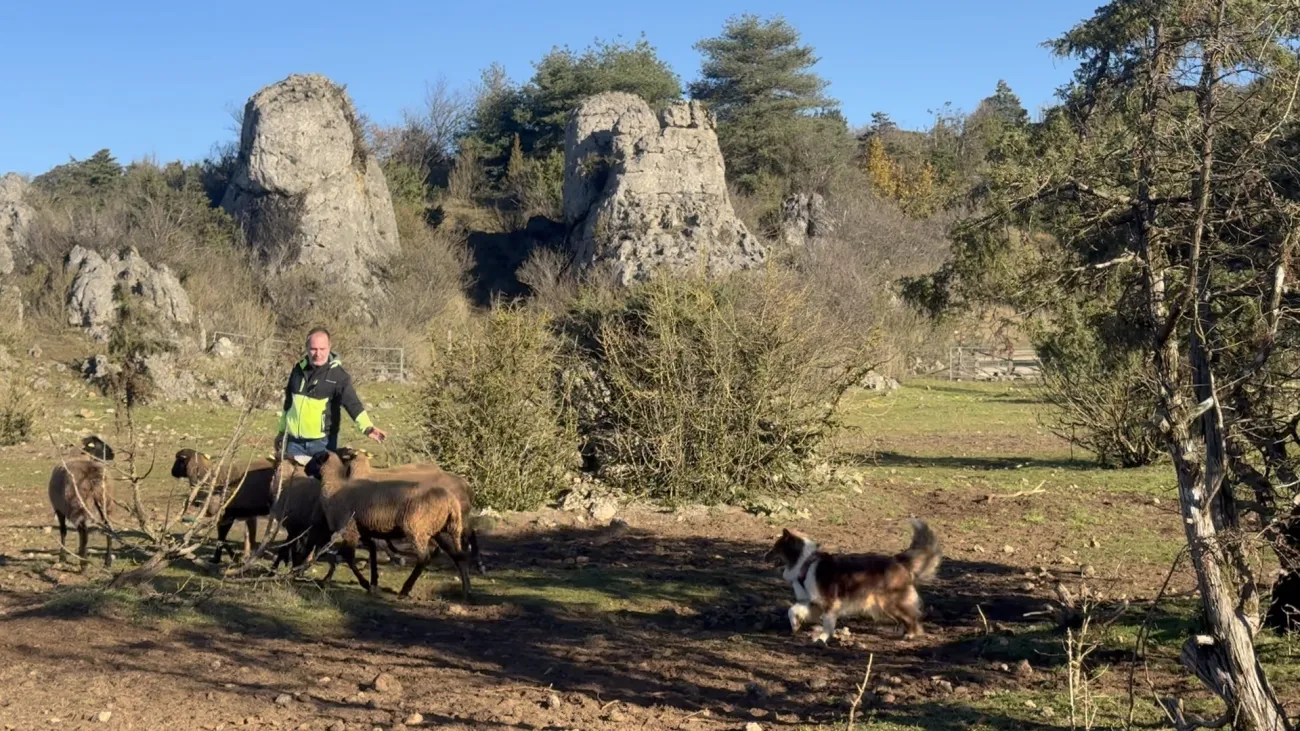
- Real-life scenarios according to the specialty (e.g., introduction to livestock, search work, detection, etc.).
- Managing work and rest cycles.
The goal is for the dog to consistently associate its activity with a positive experience, feeling the satisfaction of pleasing its handler by successfully completing the task at hand. The dog must be able to integrate new cues, understand new expectations, and adapt to different environments and contexts.
🤝 A shared partnership
My role is not only to train the dog, but also to equip the handler with the tools and methods needed to introduce new cues or behaviors independently. Working dog training is a two-way collaboration, built on understanding, consistency, and reliability.
Training sessions are deliberately short at the beginning, repeated to consolidate learning, and then gradually extended. Observing the dog’s responses—its postures, facial expressions, attitudes, and vocalizations—is an integral part of the process. This is known as canine communication, which I teach both theoretically and practically so you can learn to interpret it accurately.
“Reading and understanding canine communication means speaking the same language as your working partner.”
🎥 Session monitoring and analysis
As with other activities, training sessions may be recorded for educational purposes. These recordings make it possible to analyze key sequences, observe subtle behaviors, and refine your handling and cues. You will have access to these videos via your private area on this website to track progress and development within your team.
Every working dog is unique: its temperament, natural abilities, and role determine the training strategy. The objective always remains the same: to make learning a shared pleasure, serving effectiveness, confidence, and the handler–dog bond.
“A happy working dog is a focused, effective dog, fully engaged alongside its handler.”