🐾 Adapting physical activities according to your dog’s age and condition
Introduction
All dogs need physical activity. Walking, running, exploring, playing—these moments are essential to their physical and mental balance. However, pace, duration, and intensity must be adapted to each dog according to their age, breed, body type, health status, and physical condition.
A walk that is too long, unsuitable terrain, or poorly managed effort can quickly turn a moment of pleasure into discomfort—or even injury. The goal is simple: stay active, yes—but intelligently, for your companion’s well-being and health.
1) The specific needs of puppies
A puppy is a true sponge for learning: curious, active, and often full of energy. Yet their body is still developing. Bones, joints, and muscles are not ready to handle long walks or sustained effort.
Basic guidelines:
- ❗ Avoid long walks before growth is complete (often between 12 and 18 months depending on the breed).
- 🕒 Prefer several short daily outings (5–10 minutes) rather than a single one-hour walk.
- 🌿 Avoid very hard surfaces (asphalt, gravel) and repeated stair climbing.
- 💦 Allow frequent rest and respect the puppy’s pace: they should be able to stop whenever they need.
- 🧠 Favor exploratory walks: sniffing, observing, listening—no running.
These short but frequent moments are essential for socialization: sounds, people, dogs, and varied environments. It’s also the time to learn leash walking, recall, frustration management, and calm behavior outdoors.
🐾 “A puppy walk is an educational walk, not a marathon.”
2) Young, fit dogs
Between 1 and 5 years old, dogs are at their physical peak. This is the ideal period to develop a variety of activities: hiking, canicross, agility, hoopers, swimming, retrieve games… However, effort must always be prepared and supervised. Warm-up, gradual progression, and recovery are just as important as they are for human athletes.
Tips:
- Start each outing with a few minutes of calm walking.
- Alternate paces and terrains.
- Hydrate regularly—even in winter.
- Check paw pads and overall condition after activities.
The goal is not to “wear the dog out,” but to help them use their energy positively.
3) Senior or recovering dogs
With age, dogs still enjoy going out and discovering the world, but their bodies become more fragile. Joints stiffen, endurance decreases, and vision or hearing may decline. This does not mean stopping outings—quite the opposite: they are vital for maintaining mobility, memory, and morale.
Adapting walks:
- 🚶♂️ Choose shorter but more frequent walks.
- 🌳 Favor soft, flat terrain.
- 💧 Avoid extreme heat and severe cold.
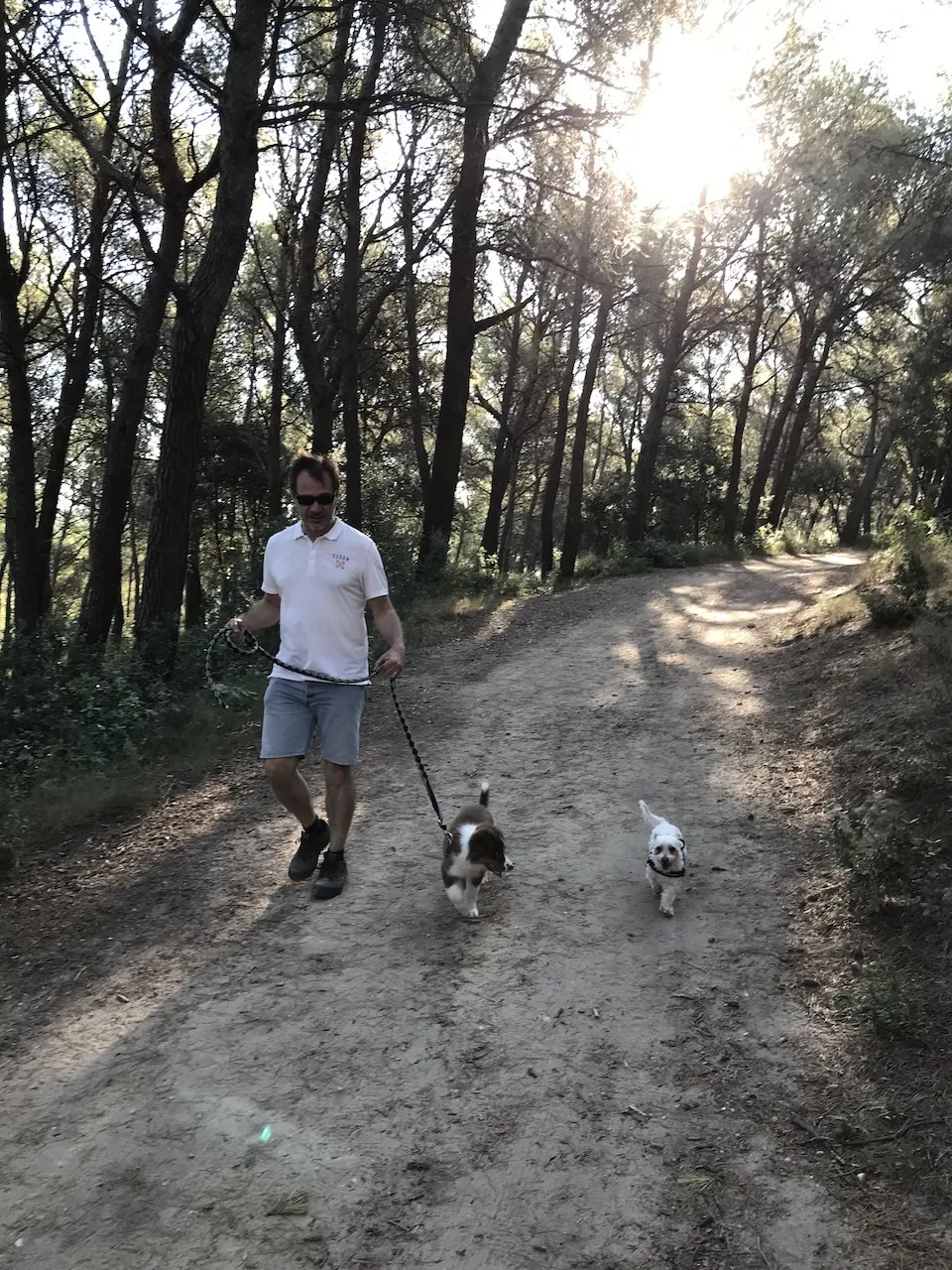
- 🐕 Let the dog walk at their own pace, without pulling.
- 🪑 Increase observation breaks: sniffing, listening, watching—this is also exercise.
🌿 “For senior dogs, moving a little every day is better than running rarely.”
During recovery (injury, surgery, arthritis, overweight), always seek advice from a veterinarian or a behaviorist trained in gentle rehabilitation. Activities such as proprioception, swimming, or canine massage can complement the work while respecting physical limits.
4) Warning signs not to ignore
A dog that is overexerted may quickly show signs of fatigue or pain:
- Unusual shortness of breath,
- Sudden slowing or refusal to move forward,
- Limping or a hunched posture,
- Tongue hanging out for a prolonged time,
- Persistent trembling or panting,
- Low tail or pinned-back ears.
In these cases, stop the activity immediately, offer water, and allow the dog to rest. If signs persist, consult your veterinarian.
5) General safety advice
- ⏱️ Wait 1–2 hours after meals before intense activity, and 30–45 minutes after a walk before feeding.
- ☀️ Avoid the hottest hours and scorching ground.
- ❄️ In winter, adapt duration and monitor paw pads.
- 🧡 During hunting season, wear an orange vest and equip the dog with a fluorescent collar or harness.
- 💦 Always carry water and offer regular breaks.
- 🦮 Use a comfortable harness rather than a collar to protect the neck.
- 🚗 Be vigilant near roads and in traffic areas.
6) The importance of pleasure and bonding
Adapting activities does not mean reducing outings—it means making them smarter, more comfortable, and more enjoyable. Each walk should remain a moment of sharing and pleasure, not a physical constraint. By respecting your dog’s pace, abilities, and needs, you foster trust, motivation, and the longevity of the partnership.
💞 “Moving together nurtures both physical health and the bond.”
Conclusion
Physical activity is essential for every dog, whatever their age. But it must be adapted, gentle, progressive, and safe. Observation and attentive listening to your dog are your best guides. By respecting their limits, you help them remain healthy, balanced, and happy—for a long time.
🐾 “Adapted activity is the secret to a dog that is happy in both mind and body.”