Since 2018
 Ollie, Australian Shepherd, an activity-loving dog!
 Ollie, a bundle of love and energy
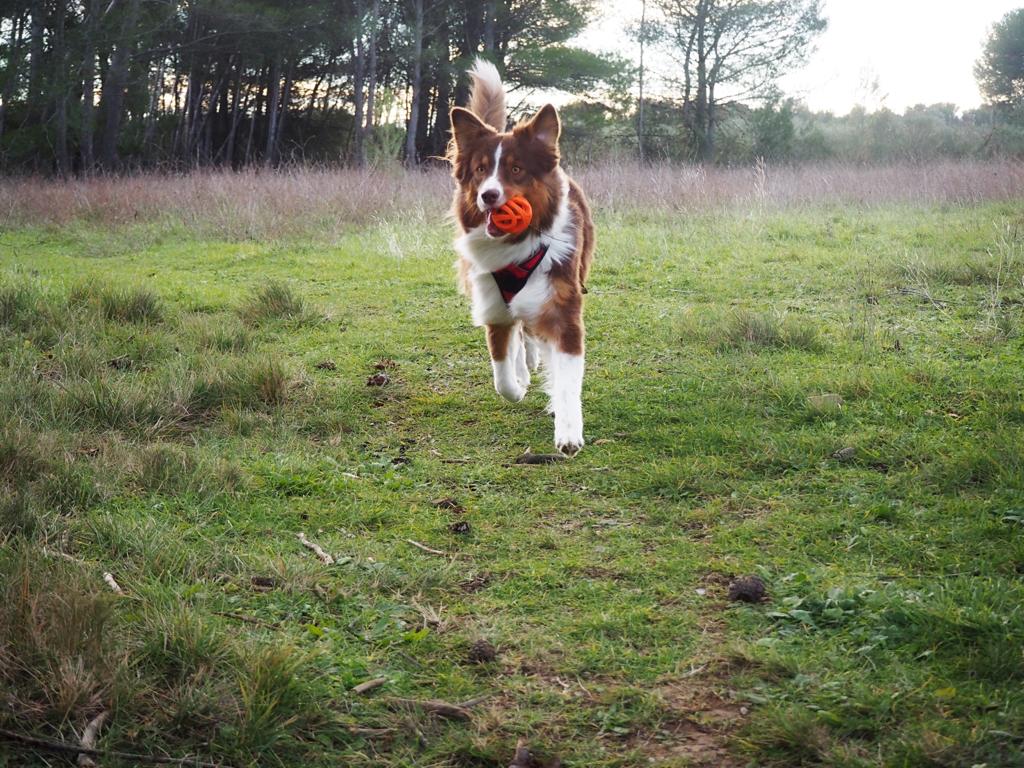
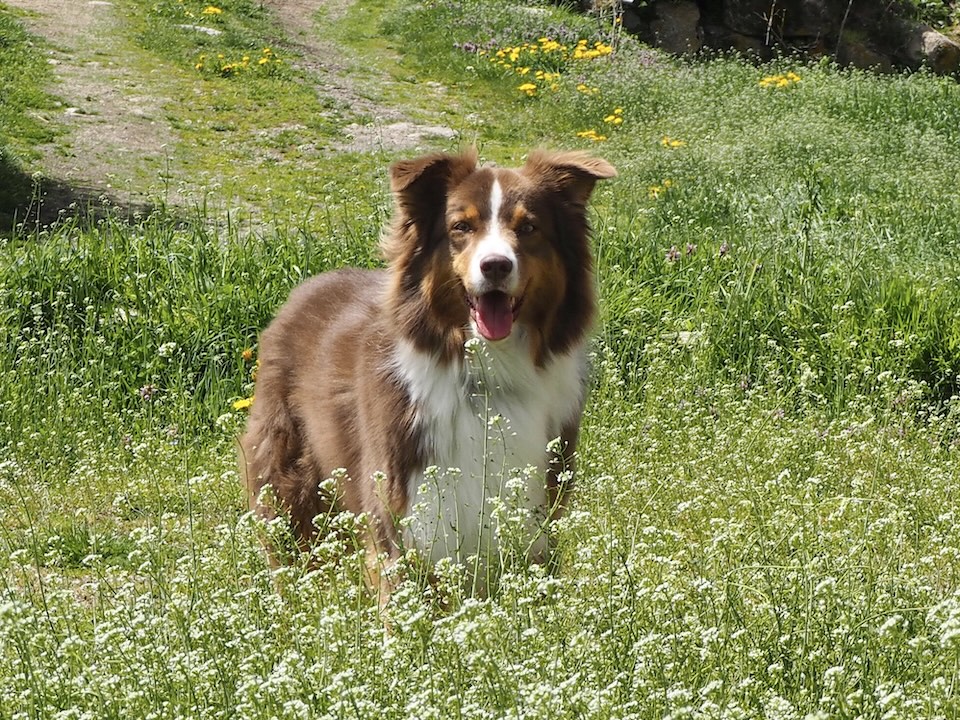
Ollie joined our family very quickly after the abyssal void left by Bahia. It is almost as if Bahia had decided to leave so that we could meet her!
New dog, new project—or rather: new projects.
My first encounter with Ollie was a sharp, vivid look in a photograph. I was convinced she had a great deal of love to give and to receive; in that sense, she took over from Bahia without difficulty (even though the bar had been set very high).
But I knew that herding dogs—and Australian Shepherds in particular—require very early handling, flawless education, and a level of activity well above average. Ollie did not break that rule; I certainly got what I expected.
From the very beginning, her arrival into the family—and her own way of welcoming the family (it is important to let the puppy initiate first contacts)—was immediate. Simply incredible, as if she had instantly understood the place she could take.
Filou and Lucky (our daughter’s cat) were already there. She also immediately understood and accepted a form of hierarchy between them.
From the very first days, I watched training videos to figure out how I would approach and adapt a new method. Honestly, when you know what you are looking for or what you want to achieve, there are some very good videos available… but there is also the worst.
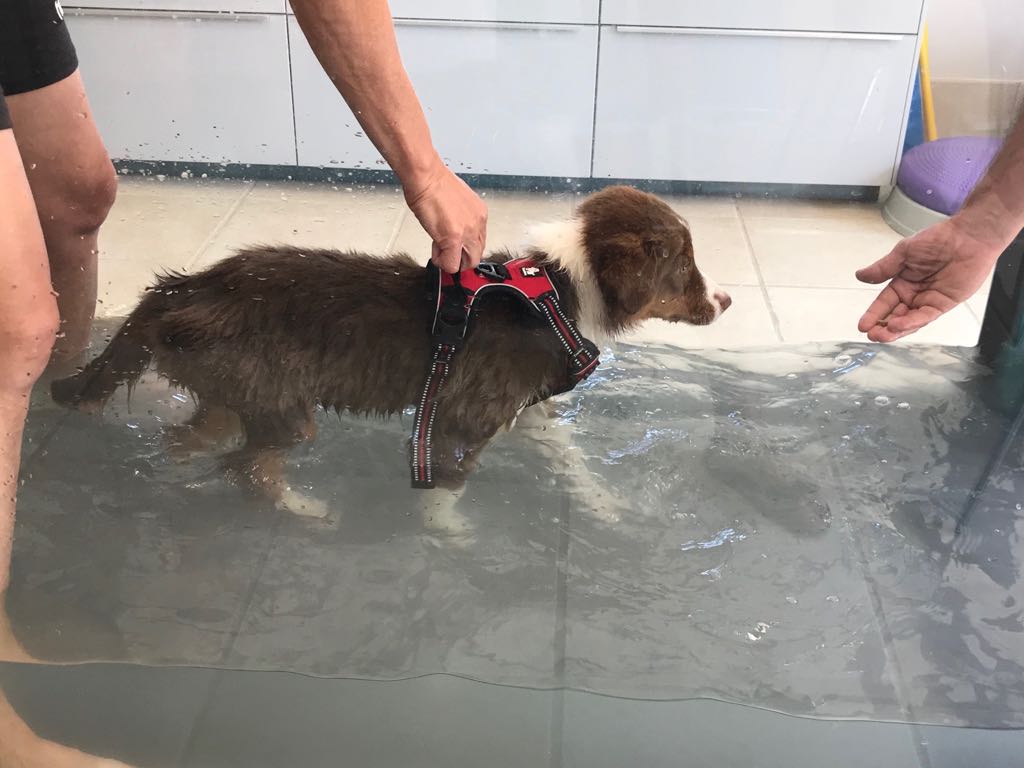
So the decision was quickly made to take her to meet Laëtitia Nicolas, “du Temps des Paluns,” and to enroll in the puppy school of the nearest dog club. Training techniques are essential, but a dog’s socialization is just as important.
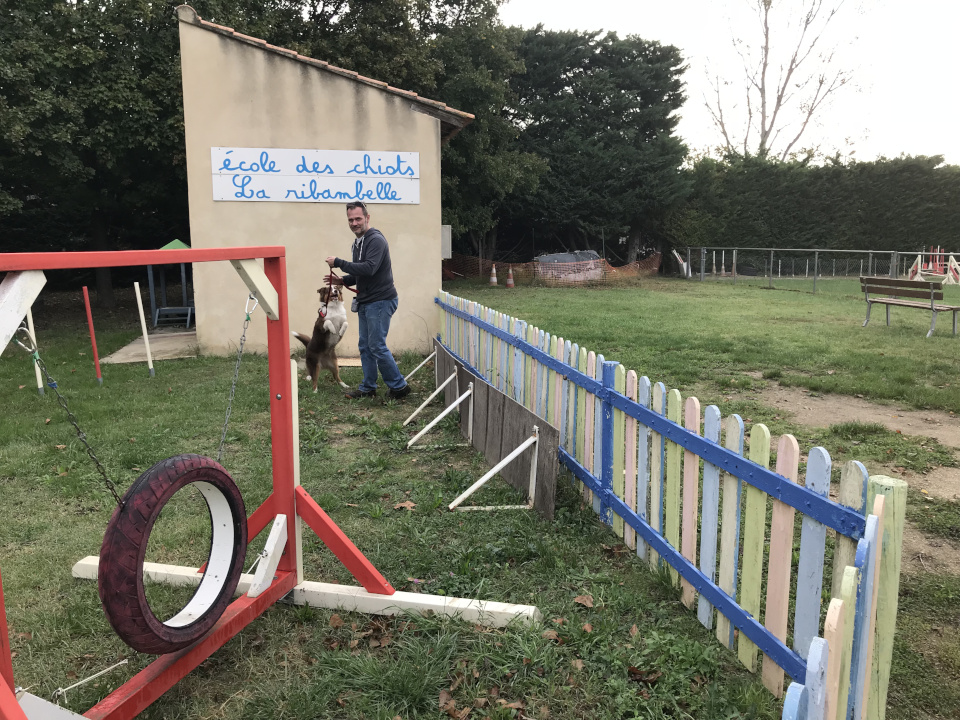
And so we launched ourselves into the world of canine education! The dog trainer (or instructor, as was the case here) matters a great deal. Through their methods, approach, advice, and an experienced outside perspective, a trainer can truly provide motivation you might never have suspected. In our case, Marie-Claude Beaume, from the CDA puppy school (Avignon), not only set us in a dynamic that created a strong bond between Ollie and me, but also allowed me to share genuine joy with the rest of the family.
It was also Marie-Claude who suggested considering a sporting activity: agility. Of course, a growing puppy is far too young to begin such a physical activity, but this is precisely when “commands,” recall, play, and mutual trust are built.
We then continued with canine education, moved on to the adolescent class, and then the adult class, where we made another essential encounter for our knowledge of dog training: the instructor Nicole Ribert, who was then in her final years in the world of canine education. She passed on invaluable knowledge and methods that were essential to understanding dogs.
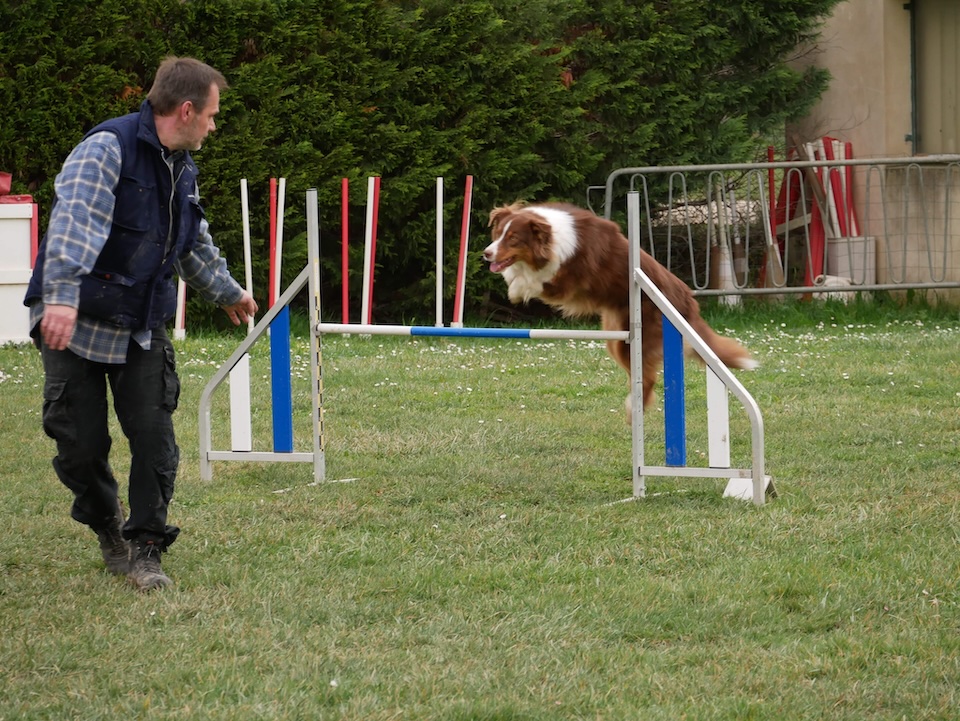
At the same time, we had begun agility. Ollie was loving it, and so was I—and because I was enjoying it, Ollie enjoyed it even more.
We had an outstanding coach, Christophe Chanterait, who shared many key insights with us. Once again, experienced external eyes are essential.
Unfortunately, just as we had obtained our Agility Pass (the certificate opening the door to competitions), I had some doubts about Ollie’s joints during two training sessions. I then had X-rays taken at our veterinarian’s clinic, and the diagnosis came in: hip dysplasia—at a less advanced stage than Bahia’s. The decision was obvious: we had to stop this activity, at least from a competitive standpoint, and we gradually switched to hoopers.
Meanwhile, we had completed canine education, and Nicole—always full of good advice—recommended that at 18 months we focus on canine activities to avoid saturating the dog and, above all, to prevent her from becoming bored in class. Shortly afterward, we were invited to start teaching canine classes ourselves. And so my wife (with the puppies), Ollie, and I (with adolescents and adults) were launched into this adventure, which allowed us to learn a great deal and to obtain instructor certifications from the Centrale Canine (MEC 1 and “Puppies”). Ollie always accompanied me in every class. What a joy!
After a move (we left Provence to settle in Lozère, in the Margeride), Ollie and I continued to try out various activities: an introduction to utility search (people), herding work with the excellent Étienne Serclérat—which we had to abandon due to the worsening of Ollie’s dysplasia—nosework (scent work), always as a team, always in search of shared enjoyment… Complicity is the key to strengthening the bond.
And the most beautiful part is that the story is still being written…
As you will have understood, Ollie still accompanies me everywhere, including in classes when she can be useful, like a true working dog.
We share a level of complicity and mutual trust that allows me to study, to experiment, and to try things with her. 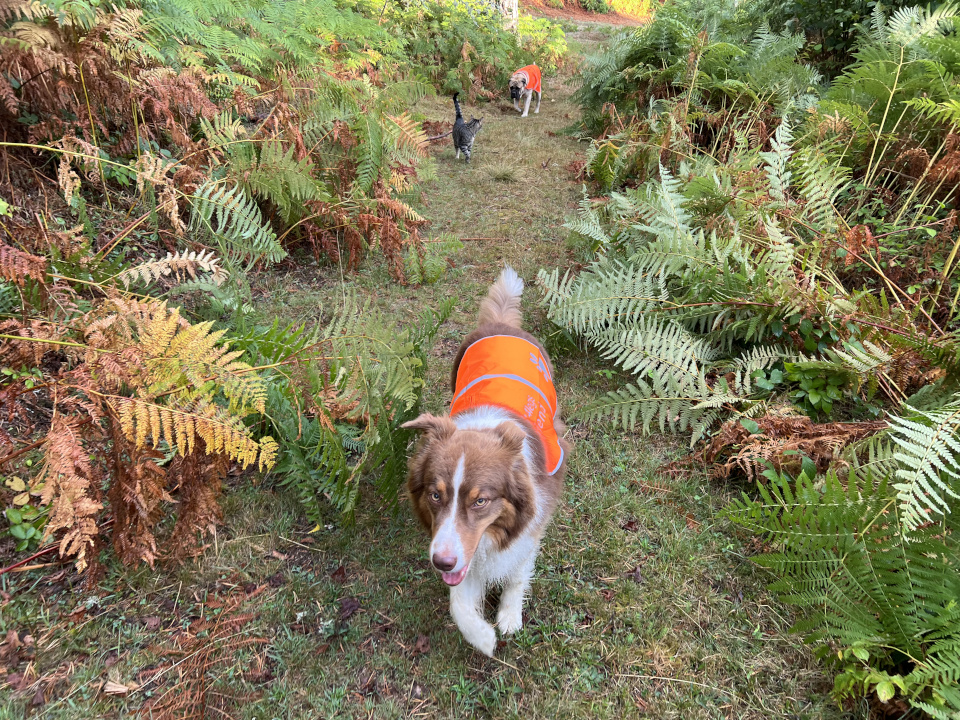 She is willing, energetic, not easily approachable by other dogs at first, and uncomfortable with forced frontal encounters.
It is also for Ollie—because of her arthritis and dysplasia—that I began training in canine massage.
Today, Ollie lives in harmony with Odin, the Bullmastiff, Lucky (the cat), and regularly with Uno (my daughter’s dog).
```