Since 2023
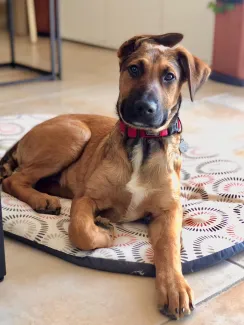 Uno: a Malinois mix full of life and joy
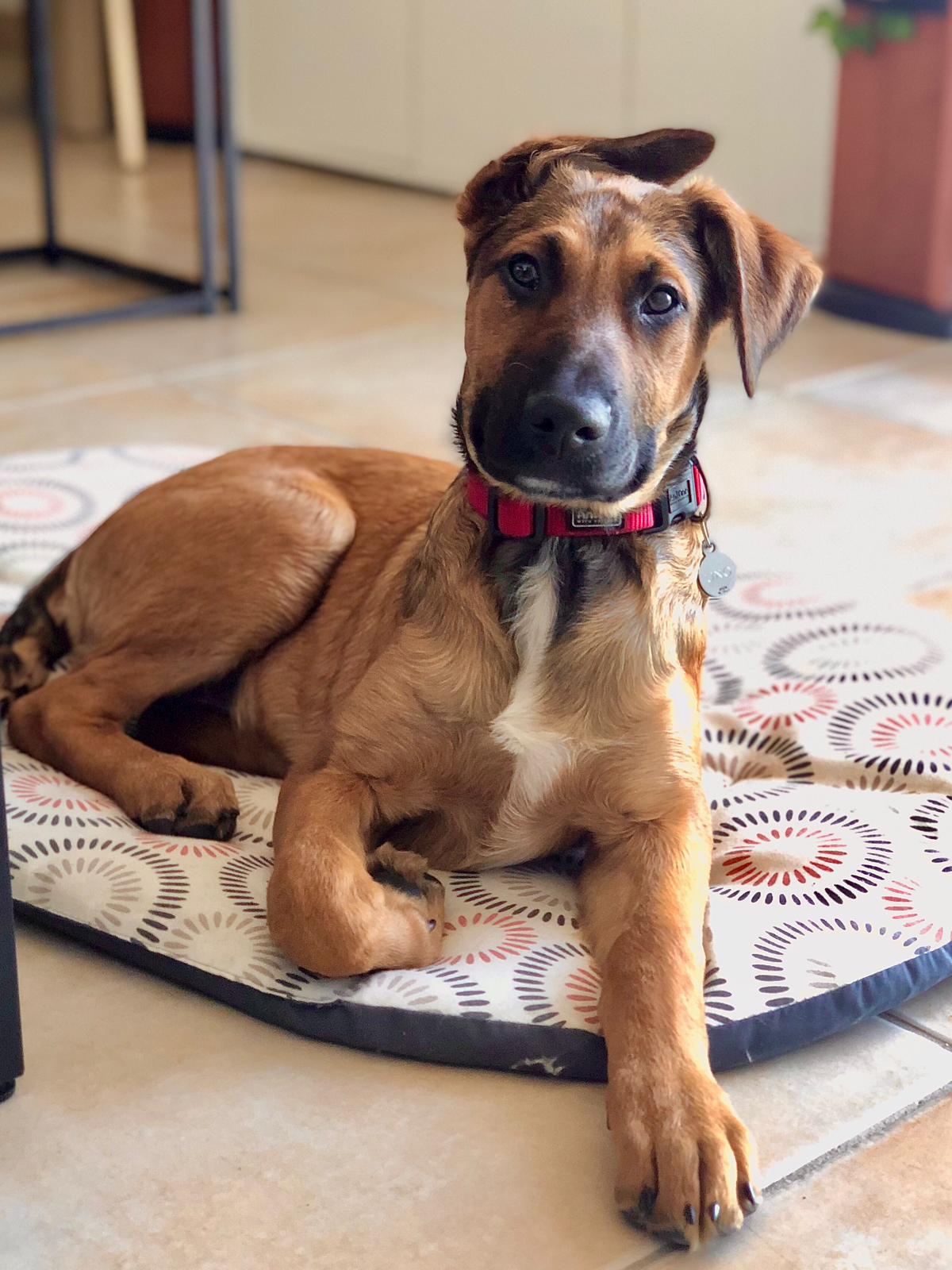
So here we have a surprise model! Neither my wife Christelle nor I were behind this adoption; in fact, I should say that Uno only lives with us part-time! It was my daughter Valentine who, right at the very end of her studies, announced in a short message on our family group chat that she had adopted a puppy: Uno (because it was the year of “U,” she liked the game, and it’s her first). Phew! For a moment, I thought I was about to become a grandfather already!
We don’t know much about the circumstances of Uno’s birth, except that it started out very badly. The litter he came from was taken in on their very first day by the SPA in Nîmes, without the mother (a Malinois). He was therefore bottle-fed along with his littermates by the shelter manager, then placed—still with his siblings—into a foster family for their first ten weeks. Everyone does their best in such cases, including the foster “mother” dog. But experience and ethological studies have shown how fundamental early interactions with the mother are in a puppy’s development: corrections, canine communication, hierarchy… Uno and his brothers and sisters could not fully benefit from this. I then thought that, for her first dog, my daughter Valentine had set the bar very high: it was her choice, the adventure was worth trying, but with no room for error—and taking part in a rescue is a very noble act. And finally, as my daughter subtly reminded me, I may be partly responsible for her love of dogs… So be it—let’s embark on the adventure together: all I can do is support her and pass on a little of my “knowledge.”
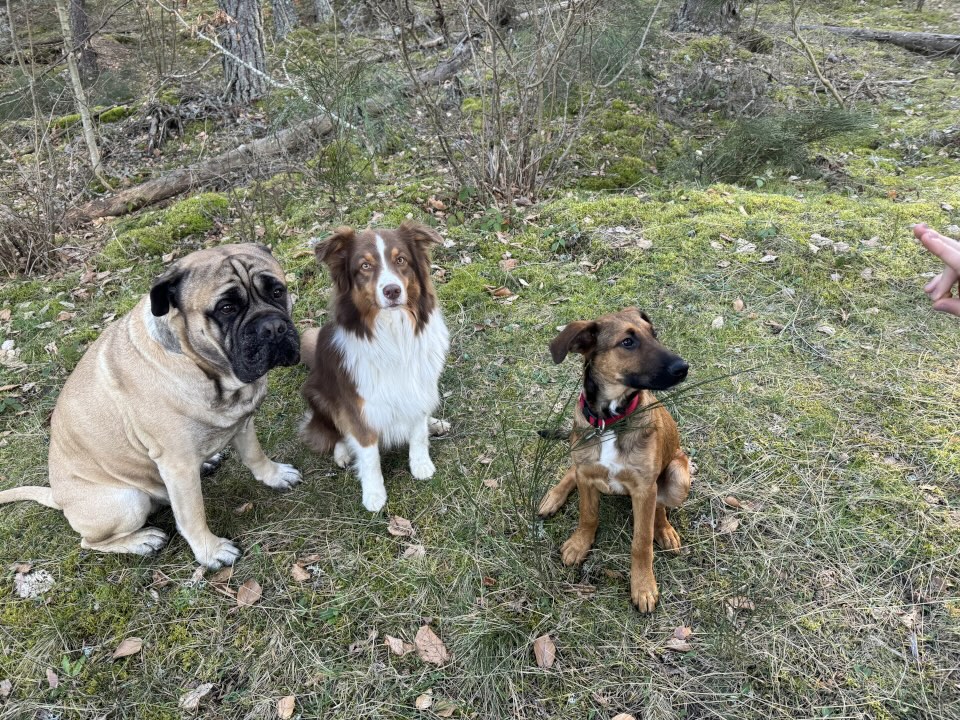
Uno has extraordinary luck: the foster family told her that he would need almost constant presence and closeness. That’s exactly the case—Valentine works from home 100%. Uno immediately developed a very strong bond and hyper-attachment to his owner. He is constantly active, especially when he is outside his own home (for example, at our place with our dogs).
Uno is a herding dog, very close to his family—even the extended family—with an unlimited need for work (play).
He is, moreover, a dog with impressive learning abilities. In that respect, he reminds me of Ollie’s early years. The advantage is that there are endless opportunities to have fun and to turn him into a working dog across a wide range of activities. I tested him on scent work (object searches to start with): his speed of information processing and understanding requires you to keep up and constantly evolve the game. Because that’s the other aspect of this type of dog—he can get bored very quickly! Bored to the point of constantly seeking engagement, and if you’re even slightly familiar with canine language, you can translate exactly what he’s asking for.
Another advantage of a dog with high learning capacity is that he can also quickly acquire certain behaviors through mimicry (by observing older dogs). With Ollie and Odin, we didn’t hold back on that.
Since finishing his growth, Uno goes on long hikes with Valentine; he’s perfect for it: energetic, athletic, and with excellent recall. It’s not uncommon for the pair to head out once or twice a month on hikes exceeding 20 km (for the owner—so ×2 or more for the dog).
Uno is very sociable, very playful, and very friendly with other dogs—but he can wear them out because he never stops! He is a hyperactive dog (and the roots of that can be found in his puppyhood). He’s the ideal companion on great days, but also on bad or very bad days: he is sensitive and picks up on all of his owner’s emotional states; he is completely devoted to her (though the reverse is just as necessary). Uno is certainly not a dog one could call easy to train. But if his owner holds steady—and she does—it will make him an exceptional dog: a true “Number Uno”!