Home
education-canine-en-margeride.fr

Navigation principale

  • Home
  • Comportementalisme & Education
    • What behavioral problems can occur?
    • Les activitĂ©s ludiques & sportives : excellentes continuitĂ©s de l'Ă©ducation
    • Qu'est-ce que l'Ă©ducation naturelle ?
    • Qu'est-ce que l'Ă©ducation positive ?
    • Le langage canin : clef de la comprĂ©hension du chien
    • Massages canin
  • Services
    • Bilan comportemental
    • Cours d'Ă©ducation canine
    • Fun and sports dog activities
    • Chien de travail
    • Interventions “ PrĂ©vention Morsure “
    • ActivitĂ©s ludiques & sportives
    • Consultation canine en visio
  • Les Chiens de Ma vie
    • Bahia : Terre-Neuve ange de nos enfants !
    • Filou, bichon X - un rescapĂ© remplit d'amour
    • Odin, Bullmastiff : un contemplatif qui a choisit notre maison !
    • Ollie, Berger Australien, une source d'Ă©nergie pour tous les projets
    • Uno : X Malinois survitaminĂ© aussi attachant qu'attachĂ©
    • Uzi : Golden Retriever complice des enfants !
  • DiplĂŽmes
  • Tarifs 2025
  • Conseils Pratiques
    • Adapter les activitĂ©s Ă  la condition physique
    • Apprendre Ă  marcher en laisse sans tirer
    • Bien ajuster et habituer son chien au harnais
    • Bien choisir le collier ou le harnais selon la morphologie de son chien
    • Chien en dĂ©pression que faire ?
    • Collier plat ou harnais ?
    • GĂ©rer l'arthrose chez son chien
    • Habituer son chien Ă  porter un collier ou un harnais
    • Jeux de rĂ©flĂ©xions pour chiens
    • La dysplasie : pathologie courante, pas une fatalitĂ© !
    • La surveillance du poids de son chien : un rĂ©flexe indispensable pour sa santĂ© !
    • Le collier Ă©lectrique... est-ce une bonne idĂ©e ou un leurre d'Ă©ducation ?
    • Le pelage du chien : indicateur de son Ă©tat de santĂ© & entretien rĂ©gulier
    • Les diffĂ©rents harnais : comparaisons & contextes
    • Les diffĂ©rents types de laisses et leurs usages
    • NĂ©cessitĂ© et biens faits de la balade rĂ©guliĂšre du chien
    • Pratiquer un sport avec mon chien : est-ce une bonne idĂ©e ?
    • PrĂ©cautions PĂ©riode de chasse
    • Qu'est-ce qu'un Hot Spot et comment le traiter ?
    • Quelle alimentation pour son chien ?
    • Transport en voiture : que dit la loi ? (et le bon sens)...
  • Adresses Utiles & recommandĂ©es
    • Cabinet VĂ©tĂ©rinaires Gatavet
    • Cabinet VĂ©tĂ©rinaire de la Montagnette
    • Educ M'ouaf
    • Symdog
    • Formateur Chiens au Troupeau - Etienne SerclĂ©rat
    • Temps des Paluns
  • Recommandations LittĂ©rature canine
    • Comprendre Les Chiens
    • Guide pratique du comportement du chien
    • Le monde secret du chien
    • Tout ce que mon chien veut me dire
Menu du compte de l'utilisateur
  • Log in

Breadcrumb

  1. Home
  2. Dog Training Sessions
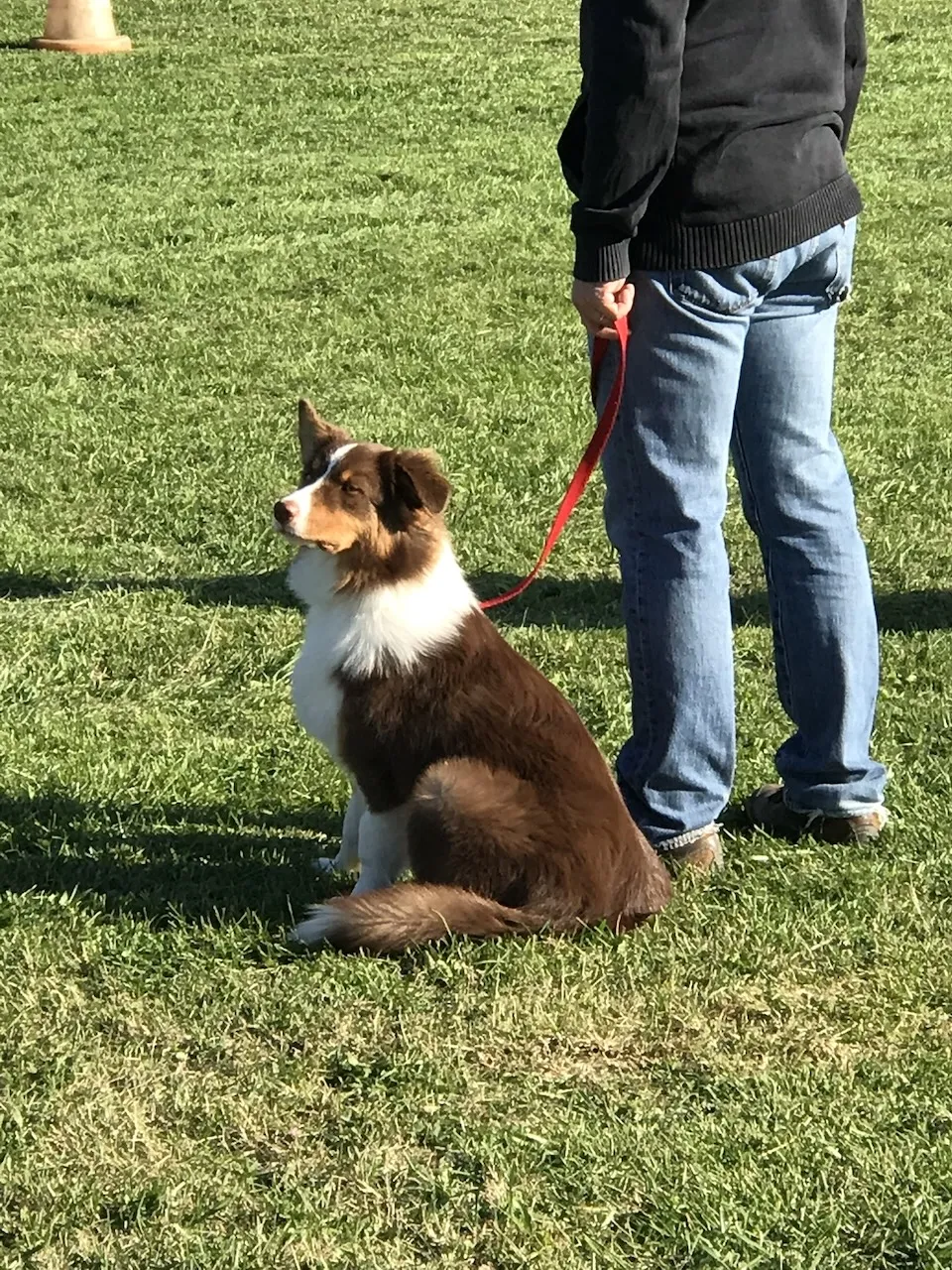
Ollie listening attentively during a training session

🐕 Dog training classes

Dog training is an essential step, whether you have a puppy who has just joined your home or an older dog you wish to integrate into a balanced family life. From the very first weeks, training helps the dog find its place within the household, understand rules, expected behaviors, and everyday routines.

Gradually, this education extends to socialization: learning to interact calmly with unfamiliar people, other dogs, and various environments such as streets, nature, or public spaces. Basic commands — “heel,” “loose-leash walking,” “recall,” “leave it” — are all essential skills for a harmonious life in every situation.

The method I use is based on positive education, the only approach that leads to solid and lasting learning. It strengthens mutual trust, respect, and bonding between owner and dog, ultimately creating a true family partnership.

Training adapted to each dog

Puppy training or the integration of an adult dog is carried out in a progressive manner. It may span 12 to 18 months, sometimes longer depending on the dog’s maturity and life experience. For adult dogs, everything depends on their history, background, and past experiences. In some cases, a prior behavioral assessment helps determine the most appropriate strategy for reintroducing basic learning.

Main objectives

  • Response to basic commands: sit, down, come, place, stay, leave it, drop, give

  • Loose-leash walking: a relaxed leash, an attentive dog, and harmonious movement between owner and dog.
  • Distraction management: ignoring scents, other dogs, passersby, or surrounding noises.
  • Play and self-control: knowing how to play, release a toy, and stop a game even at peak excitement.
  • Retrieve: calmly bringing back and releasing an object with confidence.
  • Recall and heel return: responding to the cue despite excitement or distance.

These goals may seem ambitious, but they are well within reach (and without raising your voice). No situation is hopeless: everything is built with method, consistency, and perseverance. Dog training relies on a subtle balance between clarity, gentleness, and consistency.

“No shock collars, no coercion, no pain — the key lies in motivation, relationship, and trust.”

Every dog has its own personality and pace. The trainer’s role is to adapt and fine-tune the method to create true collaborative work between dog and owner.

Session follow-up and analysis

Training sessions may include video recordings for educational purposes. These excerpts, accessible from your private area on this website, make it possible to analyze specific situations and better understand your dog’s reactions. This encourages perspective and precise adjustment of exercises for effective progress.

Individual and group classes

Training sessions can be individual or group-based. The first sessions are generally conducted individually to encourage the dog’s focus and limit distractions. Once the basics are acquired, group classes fully come into their own: the presence of other dogs and people stimulates learning through observation and strengthens emotional control.

Remote training

For owners who are geographically distant, I also offer remote training sessions. The principle is simple: you receive exercise videos, then send me your own practice videos. This allows me to provide detailed and personalized feedback, with adjustment advice or new exercises to work on.

“Training means learning together, with patience and kindness, to build a balanced and lasting relationship.”

📍 Contact details

Pascal Flork
Éducation Canine en Margeride
678, route du Lioubeau
48600 Auroux, France

📧 pascal@education-canine-en-margeride.fr
📞 +33 6 19 36 03 64
🌐 education-canine-en-margeride.fr

English spoken


🚗 Service area

Margeride, LozĂšre (48) and neighboring departments:
Haute-Loire (43), ArdĂšche (07).
Sessions at home, outdoors, or on a secure training field.
Online consultations available for all geographically distant areas.

📞 Call ✉ Request an appointment

Services liés

“Bite Prevention” Workshop
Canine behavioral assessment
Canine behaviorist and trainer
Dog training sessions
Fun and sports dog activities
Online canine consultation
Working Dog

ThÚmes liés

Adult dog
Canine behavioral disorders
Canine body language
Canine Rehabilitation
Dog Training
Puppy
Reactive dog
Working dog

Menu Légal

  • Demande de rendez-vous
  • Contact
  • Mentions lĂ©gales
  • CGV
  • CGU
  • Politique de confidentialitĂ©

Menu général

  • Home
  • Comportementalisme & Education
  • Services
  • Les Chiens de Ma vie
  • DiplĂŽmes
  • Tarifs 2025
  • Conseils Pratiques
  • Adresses Utiles & recommandĂ©es
  • Recommandations LittĂ©rature canine

education-canine-en-margeride.fr
is a service developed by Pascal Flork.

SIRET: 440 900 561 00034
For more details, please visit the Contact page.

© 2025 — Website design by Pascal Flork.

Powered by Drupal